

|
Many tea lovers have run into frustrating situations where glass teapots crack right after pouring boiling water. Regular soda‑lime glass reacts violently to abrupt temperature swings. The inner surface heats and expands fast while outer glass remains cool, generating massive internal stress. Micro‑cracks spread quickly and may lead to complete shattering. This common problem pushes both home users and tea‑shop operators to seek reliable heat‑resistant glass teaware solutions.
|
 |
 |
The core advantage of borosilicate glass originates from its specially adjusted chemical composition. During glass melting, boron trioxide is added to reconstruct the internal silicate network. Durable boron‑oxygen bonds form inside the material matrix, which effectively lowers the thermal expansion rate of the whole glass body. This unique molecular foundation creates the basic condition for outstanding thermal‑shock resistance of borosilicate teapots.
|
|
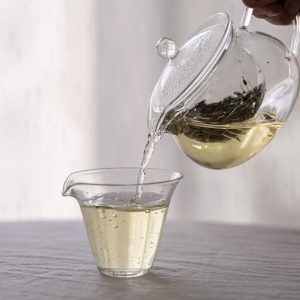
From actual testing data, borosilicate glass only has roughly one‑third thermal expansion coefficient of ordinary soda‑lime glass. When boiling water is poured into a room‑temperature teapot, inner and outer glass layers expand and contract at nearly the same speed. There will be no sharp stress accumulation inside the vessel. Even facing instant high‑temperature impact, the teapot can stay intact without crack generation.
|
 |
 |
High‑quality raw material alone cannot guarantee stable finished product performance. The annealing process plays an equally vital role in manufacturing. After forming, teapot blanks go through slow and controlled cooling procedures to eliminate residual stress produced under high‑temperature processing. Products skipping sufficient annealing may still break under hot‑water shock, even made of genuine borosilicate raw material.
|
|
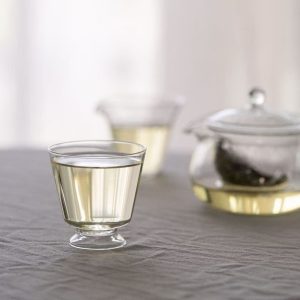
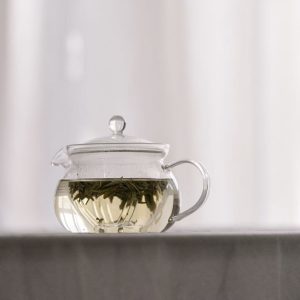
Besides prominent thermal performance, borosilicate glass brings great practical value for tea‑making scenarios. It holds stable chemical properties against various hot tea infusions and will not release impurities to alter beverage flavor. Its high‑transparency texture can fully display tea liquor color, and the glass surface keeps bright and clean after repeated long‑term use and daily washing.
|
 |
 |
It is worth noting that thermal‑shock resistance is not equal to completely unbreakable. Heavy physical collision, deep surface scratches or extreme partial temperature difference can still cause glass damage. Reasonable daily operation and careful handling are still required to extend the service life of borosilicate glass teapots for families and commercial places.
|
|
Against the backdrop of expanding global drinkware market, glass packaging suppliers keep optimizing melting and forming techniques. Qualified borosilicate teapot blanks are supplied to teaware brands and overseas wholesale buyers, satisfying the growing market demand for durable and safe heat‑resistant tea‑making vessels.
|
 |
What Makes Borosilicate Glass Teapots Resist Sudden Boiling Water?
Sep, 01. 2026
|
1310 View


