

Glass material composition directly determines its anti-thermal-shock performance. Ordinary unmodified soda-lime glass has a high thermal expansion coefficient, and can only withstand tiny temperature differences; even short-time continuous burning will form local hot spots and induce cracks. Low-cost glass without borosilicate formula lacks stable molecular structure, making it the most prone to thermal damage. In contrast, high-quality borosilicate glass and fully annealed soda-lime glass feature low expansion rates, which balance heat distribution and greatly reduce cracking probability during repeated heating and cooling cycles.
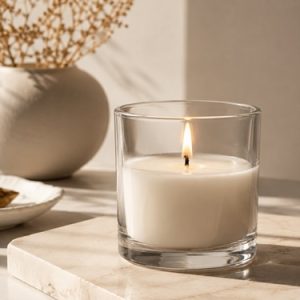
Unqualified production technology is another major hidden danger. Glass jars with uneven wall thickness cannot transfer heat uniformly during combustion, and thin areas will bear excessive thermal stress first. Internal manufacturing defects such as tiny air bubbles, surface scratches and uneven bottom thickness act as stress concentration points, where cracks tend to expand quickly once heated. In addition, jars skipping the annealing process lock residual internal stress during molding; the accumulated stress will erupt into fractures under the sustained heat of candle flames.
Unreasonable candle and wick matching also accelerates glass damage. Over-sized wicks, multi-wick combinations or too long trimmed wicks will produce oversized flames, forming ultra-high-temperature hot zones at the bottom and side walls of jars. When the wax liquid level drops too low after long-time burning, the flame gets extremely close to the glass base, forming an extreme temperature gradient between the bottom and upper body of the jar. Some high-melting-point wax releases stronger radiant heat, further aggravating the thermal load on thin glass containers.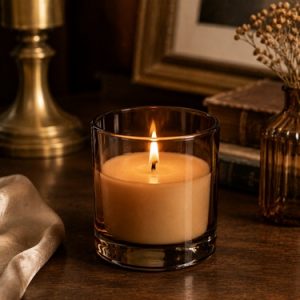
Improper consumer usage habits cannot be ignored. Putting hot burning glass jars on cold stone, metal or damp countertops creates instant sharp temperature drop; splashing cold water on warm candle vessels after extinguishing will directly cause violent thermal shock. Long-term uninterrupted burning beyond the recommended duration also lets heat accumulate continuously inside glass, gradually expanding micro-fractures into visible cracks. Even external cold air blowing on hot glass jars will trigger local temperature imbalance.
The design of glass jar structure also affects thermal stability. Vessels with overly thin bottoms, sharp right-angle corners and overly narrow inner diameters gather heat easily and lack space for uniform heat dissipation. Extremely thick glass walls also bring hidden risks: heat transfers slowly through thick glass, widening the temperature gap between inner and outer layers and increasing thermal stress instead of improving safety. Balanced wall thickness, rounded bottom corners and reasonable inner space help disperse heat evenly and relieve stress accumulation.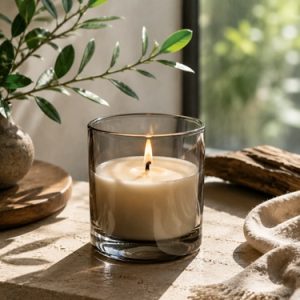
To sum up, thermal cracking of glass candle jars is never caused by a single factor, but the joint result of inferior glass raw materials, defective molding technology, mismatched candle wick configuration and irregular burning operation. For candle manufacturers, selecting borosilicate or fully annealed uniform-thickness glass jars, matching appropriate wick sizes and marking standardized burn instructions can effectively lower cracking risks. For consumers, following official burn time limits and avoiding sudden temperature changes will greatly extend the service life of glass candle containers and eliminate potential safety threats. Properly screened glass vessels, standardized production and correct usage together stop thermal shock cracking and guarantee safe candle burning experience.


