

Is it healthier to drink from glass bottles?
Author: Jolin Sun
Is it healthier to drink from glass bottles? For beverage brands, the question is more useful when viewed from a packaging perspective: how well does the bottle protect the drink, and how suitable is the complete packaging system for its intended use?
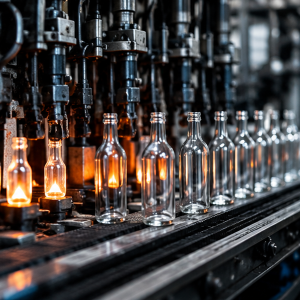 Glass has long been used for water, juice, soft drinks, beer, wine and other beverages because it provides a strong barrier and is highly stable for many food-contact applications. Unlike packaging materials that may contain multiple functional additives, a properly manufactured glass bottle provides a relatively inert container surface. However, buyers should avoid treating “glass” itself as a guarantee of health or safety. Food-contact compliance depends on the complete package, including glass, coatings, printing, closures, liners and other components. FDA evaluates food-contact substances partly through migration and intended-use conditions.
For procurement teams, this creates several important questions. What beverage will the bottle contain? What filling temperature will be used? How long will the product be stored? Which cap and liner will be selected? Acidic drinks, alcoholic beverages, oils and other products can require different packaging specifications.
Bottle design also affects safety and cost. A thicker bottle may improve resistance to certain handling conditions, but excessive weight increases transportation costs. A lightweight design can reduce material consumption and logistics weight, provided the bottle still meets the required mechanical and filling requirements. Surface quality, neck finish, dimensional tolerance and closure compatibility should therefore be considered before mass production.
There is also an important sustainability angle. Recent life-cycle studies indicate that reusable glass systems can perform well environmentally when supported by efficient collection, washing, return logistics and multiple reuse cycles. In 2026, research on refillable packaging continues to emphasize that the environmental advantage depends heavily on transport distance, return rates, breakage and recycling infrastructure.
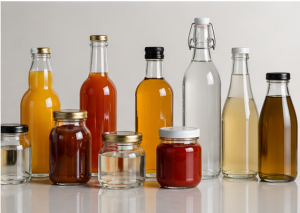 For brands planning custom glass bottles, the smartest approach is therefore not simply asking whether glass is “healthier.” Instead, buyers should evaluate the entire packaging system: food-contact requirements, bottle design, closure materials, testing, filling conditions, transport performance and end-of-life options.
A well-designed glass bottle can combine product protection, premium appearance, brand differentiation and responsible packaging performance—making it more than just a container, but an important part of the product itself.


