

| Soot blackening on inner walls is a frequent trouble for glass candle cup users. Many customers mistakenly regard black stains as glass quality issues. In fact, most dark carbon residues come from incomplete candle combustion. Proper usage and small adjustments can greatly reduce soot marks and keep glass vessels bright and transparent for longer time. |  |
 |
Over‑grown candle wicks stand as the leading cause of heavy soot buildup. When wicks become too long, flames turn large and shaky. Insufficient oxygen leads to partial burning of wax, releasing plenty of floating carbon particles. These tiny particles drift and adhere to cool inner glass surfaces, slowly building up obvious black layers along jar walls. |
| Ambient airflow also brings negative influence on candle burning status. Wind from open windows, fans or air conditioners makes flames flicker non‑stop. Unstable flame disturbs balanced combustion reaction and produces extra smoke. Even high‑grade thick‑walled glass candle cups will suffer soot pollution under drafty surroundings. | 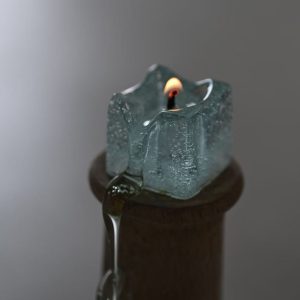 |
 |
Improper matching between wax and wick cannot be overlooked as well. Undersized or oversized wicks break normal burning rhythm. Low‑quality wax raw materials and over‑added fragrance components will increase smoke output. Continuous burning for too many hours also raises jar temperature and speeds up soot attachment inside glass cups. |
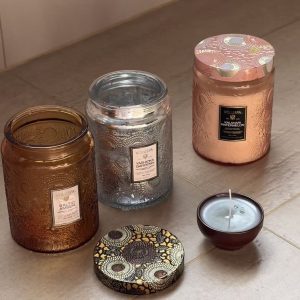
| Simple daily burning habits can effectively control soot generation. Always trim the wick to 1/4 inch before each lighting and clear carbon mushroom‑shaped residues. Place candles away from vents to guarantee stable flame. Do not keep one candle burning more than four hours without interruption for better using performance. |  |
 |
Correct extinguishing methods also help lower inner‑wall contamination. Blowing out candles violently creates sudden smoke surge that leaves carbon spots. Using candle snuffer or wick dipper puts out flame gently and cuts down smoke inside containers. These small steps protect glass inner surface from unnecessary soot deposits. |
| For candle manufacturers, reasonable component selection and user guidance play important roles. Pick suitable wick sizes and clean‑burning wax formulas for glass cups. Print clear burning reminders on product labels to guide end‑users. Right operation guidance reduces complaints and maintains the elegant look of glass candle cups. | 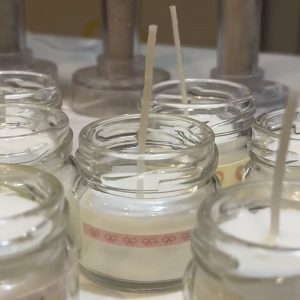 |
How To Prevent Soot Buildup On The Inner Wall Of Glass Candle Cups
Aug, 25. 2026
|
236 View


