

|
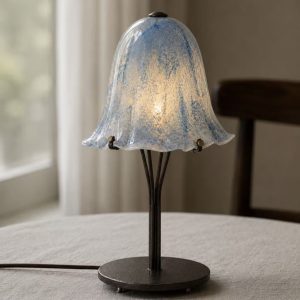
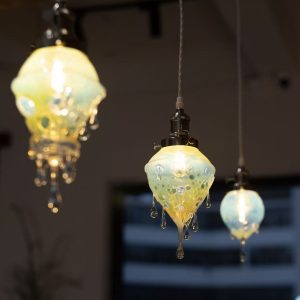
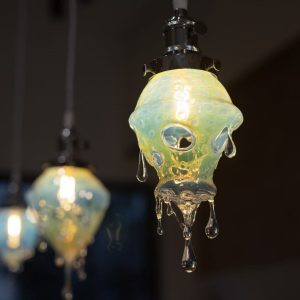
Frosted glass lamp shades are widely preferred across residential, hotel and commercial lighting applications for their gentle, eye‑friendly glow. Many users appreciate their cozy illumination effect yet seldom understand exactly how this soft visual experience comes into being. The magic does not lie in glass raw material itself, but special surface treatment that reshapes light travelling paths.
|
 |
 |
Clear glass allows light rays to pass through in nearly straight lines. Bare bulbs or transparent lamp shades deliver bright but harsh illumination, producing sharp‑edged shadows and obvious bright hot‑spots. Direct‑view exposure to naked light sources easily triggers glare and visual fatigue for human eyes, which becomes a common pain point in interior lighting design.
|
|
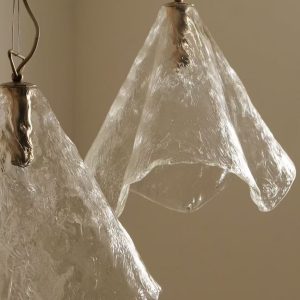
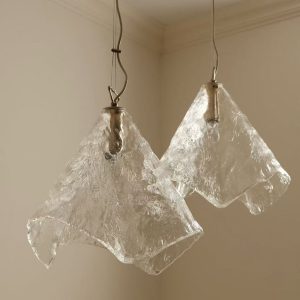
Frosting treatment builds countless microscopic uneven bumps and pits on glass outer or inner surface. These micro‑scale irregular facets act as tiny light‑bending units. When light beams from bulb hit this matte surface, they no longer travel along original straight routes. Instead, massive refraction and reflection happen, scattering light toward all directions randomly.
|
 |
 |
Two mainstream industrial crafts form this functional micro‑roughness: acid etching and sandblasting. Acid etching chemically corrodes glass surface to gain silky uniform matte texture. Sandblasting blasts fine abrasive particles at high pressure to physically roughen glass skin. Both methods achieve light‑scattering capability, while subtle texture differences bring slight variation on haze degree and light transmission rate.
|
|
During light‑diffusing process, frosted glass keeps balanced light transmittance generally between 70‑82 percent. Only limited portion of luminous energy gets absorbed or blocked. Most light spreads evenly over the whole lampshade surface, turning a concentrated bright bulb point into large‑area gentle luminous surface. Sharp contrast and hard‑edged shadows are greatly weakened accordingly.
|
 |
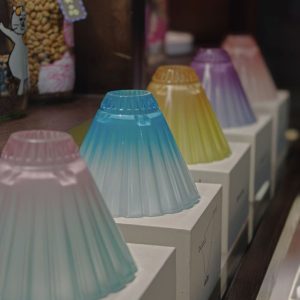 |
Such optical performance brings tangible real‑world benefits. Glare is effectively suppressed, bulb filament details are blurred without complete shielding. Bedroom table lamps, bedside wall sconces and hotel corridor pendant lights adopting frosted glass shades build warm relaxing atmosphere. It fits well for long‑time reading, resting and social scenarios requiring comfortable ambient light.
|
|
Manufacturers must strictly control frosting depth and surface uniformity for stable diffusion quality. Uneven frosted finish will cause patchy brightness, partial bright streaks or dim zones on finished lampshade. Reliable batch consistency remains critical for glass component suppliers serving global lighting brand clients.
|
 |
How Does Frosted Glass Lamp Shade Create Soft Diffused Lighting?
Sep, 01. 2026
|
1362 View


