

Glass Culture: Reusable or Disposable?
Author: Jolin Sun
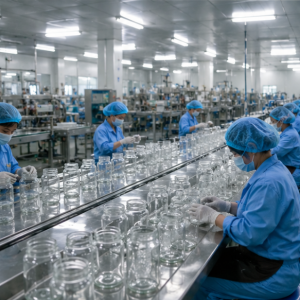 Plant tissue culture is becoming increasingly focused on efficiency, contamination control, and sustainable laboratory practices. For buyers sourcing glass tissue culture jars, the real question is no longer simply “glass or plastic?” It is how the vessel performs through repeated sterilization, handling, cultivation, and storage.
Reusable glass tissue culture jars are attracting attention because they can combine transparency, durability, and repeated sterilization. Glass jars are already used as reusable cultivation vessels for multiple plants, while autoclavable glass-and-cap combinations are available for tissue culture applications.
For purchasing managers, however, material alone should not determine the decision. The first consideration should be sterilization compatibility. A suitable jar should tolerate the intended autoclave process without deformation, cracking, or significant loss of transparency. The lid and sealing design are equally important because contamination can turn an inexpensive vessel into a costly production problem.
The second factor is visibility. Clear glass allows growers and laboratory technicians to monitor roots, shoots, media condition, moisture, and possible contamination without repeatedly opening the vessel. This can reduce unnecessary handling and make routine inspection easier.
The third factor is total cost of ownership. Disposable plastic vessels may be convenient for high-throughput operations, but reusable glass can become attractive where vessels are repeatedly sterilized and reused. Industry suppliers specifically position reusable glass cultivation vessels as an economical choice for smaller operations.
Buyers should also compare jar dimensions, mouth diameter, working volume, glass thickness, lid compatibility, packing method, and breakage protection during international transportation. A good supplier should be able to provide samples before mass production and support customized dimensions, lids, packaging, and private-label requirements.
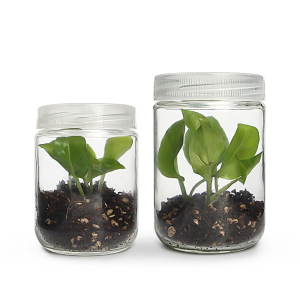 For commercial tissue culture laboratories, nurseries, universities, research centers, and plant biotechnology companies, the best vessel is ultimately the one that balances sterilization performance, contamination control, usability, durability, and long-term procurement cost.
For glass tissue culture jar manufacturers, this shift creates an opportunity: instead of selling only a container, suppliers can provide a complete cultivation solution designed around the buyer’s sterilization process and production workflow.


