

Glass bottles are widely used in various industries, such as the food and beverage industry, pharmaceutical industry, and cosmetics industry. The production process of glass bottles involves several steps, including raw material preparation, melting, molding, annealing, and inspection.
Firstly, the raw materials for making glass bottle are silica sand, soda ash, limestone, and other additives. These materials are carefully measured and mixed in specific proportions to achieve the desired glass composition. The mixture is then heated in a furnace at a high temperature, typically around 1500 degrees Celsius, until it melts and forms molten glass.
Once the glass Jar is in its molten state, it is ready for the molding process. There are different methods of molding glass bottles, including the blow-and-blow method and the press-and-blow method. In the blow-and-blow method, a glassblower uses a blowpipe to blow air into the molten glass, creating a bubble. The glass is then shaped using molds to form the desired bottle shape. In the press-and-blow method, the molten glass is pressed into a mold and then blown with air to achieve the final shape.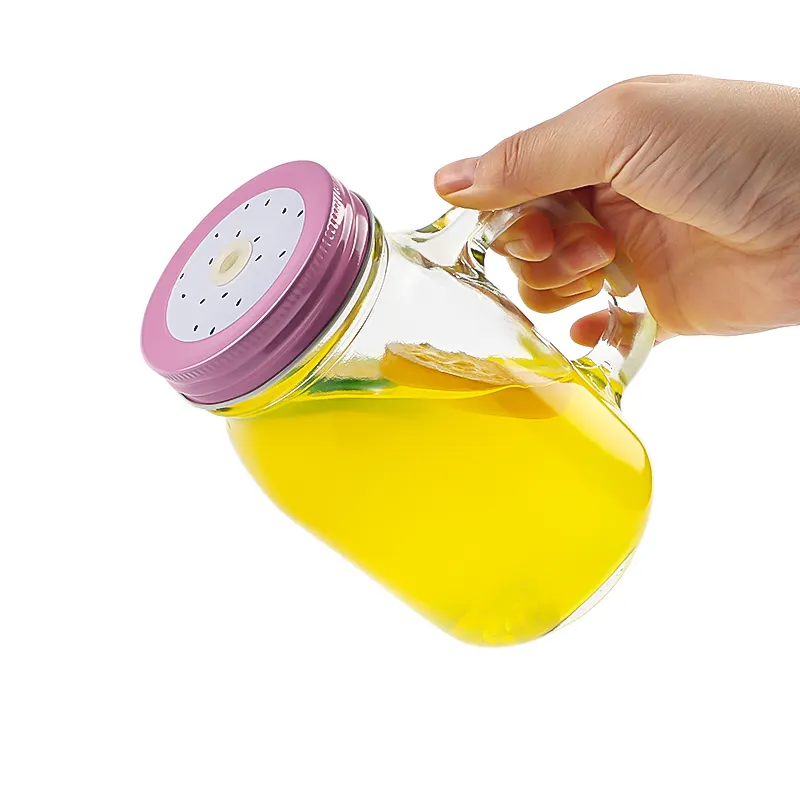
After the Beverage bottle are molded, they undergo the annealing process. This involves slowly cooling the bottles to relieve any internal stresses and make them more durable. The bottles are placed in an annealing lehr, which is a special oven that gradually reduces the temperature over a period of several hours. This controlled cooling process ensures that the glass bottles are strong and resistant to breakage.
Once the annealing process is complete, the bottles go through a thorough inspection to ensure their quality. This includes checking for any defects, such as cracks, bubbles, or uneven surfaces. Quality control measures are implemented to ensure that only flawless bottles are allowed to proceed to the next stage.
After passing the inspection, the glass bottles are ready for packaging and distribution. They are carefully packed to prevent any damage during transportation. The packaging may include individual wrapping, grouping in cartons, or palletizing, depending on the size and quantity of the bottles.
In conclusion, the production process of glass bottles involves several crucial steps, including raw material preparation, melting, molding, annealing, and inspection. Each step requires precision and expertise to ensure the production of high-quality glass bottles. With their versatility and durability, glass bottles continue to be an essential packaging solution for various industries.


